
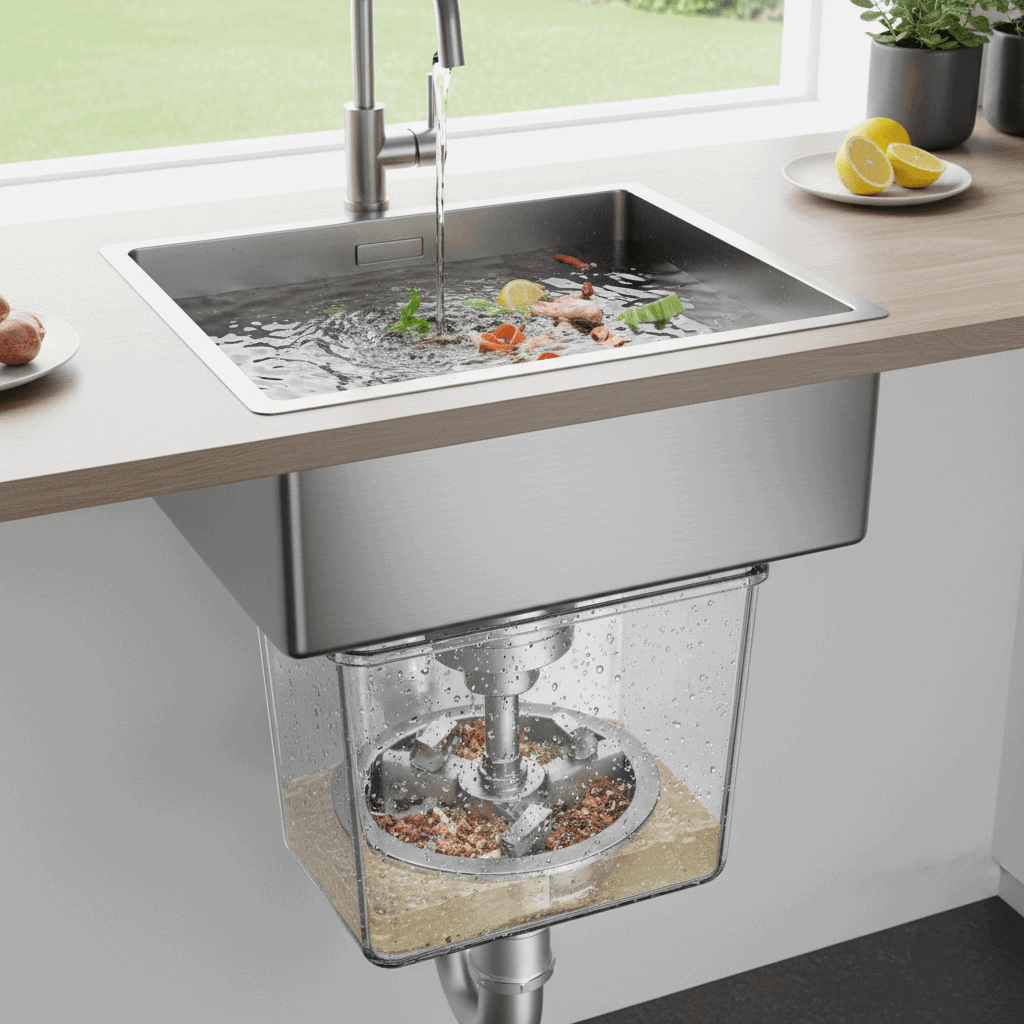
Most homeowners think a garbage disposal is a simple switch and motor. The reality is that the unit relies on a set of mechanical and plumbing interactions that control how food waste is broken down and carried away. Learning Garbage Disposal Function Basics makes it easier to fix small problems at home and to choose the right service when a replacement or major repair is needed.
This article breaks down how disposals work, what goes wrong, and practical steps you can take to keep a unit running longer. You will find clear examples, maintenance tips you can use today, and guidance on when to bring in a professional for more complex repairs.
Garbage Disposal Function Basics explained
At its core a disposal turns food scraps into smaller particles that can flow through drains. Most household units sit under the sink and are powered by an electric motor. When you flip the switch the motor turns a spinning plate or impellers. Water from the faucet helps carry the particles through the drain trap and into the home sewer line.
Understanding this process sheds light on common failure points. For example if the motor runs but nothing grinds then internal components may be jammed. If the unit hums but will not turn then the motor could be stuck or the reset switch might be tripped. Knowing the signs helps you take the right next step.
Key components that determine function
Breaking the unit down into parts makes it less mysterious. Focus on these components.
- Motor The heart of the system. Power rating varies by model and affects the unit capacity for tougher scraps.
- Flywheel or grinding plate This part spins and uses centrifugal force to fling food particles against grinding surfaces.
- Impellers Also called lugs. These do not cut like blades. They press food against a stationary surface to break it up.
- Grinding chamber The sealed area where breaking down happens. It must remain sealed to prevent leaks and odors.
- Drain outlet and trap These move the processed waste into the plumbing. Clogs downstream can look like disposal failures.
How a disposal turns scraps into flowable particles
The process begins the moment the switch is flipped. Water enters the unit and helps create a slurry. The motor spins the plate and impellers at high speed. Food is thrown against the grinding ring where it is broken down. Small particles then wash out through the outlet and enter the household drain. The trick is that most disposals are designed to handle soft food waste. Hard items and fibrous materials create stress at certain points in the system.
Example of normal operation
Run cold water for 15 seconds before adding scraps. Feed small amounts at a time. After grinding let the water run for another 15 to 30 seconds to move particles out of the drain. This simple routine reduces the chance of a clog and prevents buildup inside the grinding chamber.
Why water temperature matters
Cold water helps keep fats and greases solid so they can be chopped into smaller pieces and flushed away. Hot water can melt fats which then re solidify further down the drain and cause blockages. That is why cold water is a practical tip rather than a rule of thumb from a manual.
Common problems and simple troubleshooting
Knowing Garbage Disposal Function Basics helps you identify problems early and often fix them quickly. Below are frequent symptoms and straightforward checks you can do at home.
- Humming with no grinding This usually means the motor is receiving power but the impellers are stuck. Turn off power at the switch and try to free the jam manually with a wooden spoon through the sink opening or by using the hex key at the bottom of some models.
- No power Check the reset button on the bottom of the unit. Also verify the wall switch and circuit breaker are functioning. Replace a blown fuse or flip a tripped breaker as needed.
- Leaks Leaks can come from the flange, the dishwasher connection, or the bottom discharge. Tighten mounting bolts and check hose clamps. If seals or the sink flange are corroded replacement is usually the solution.
- Strange noises Metallic clunks often mean a foreign object has fallen into the chamber. Turn off power and remove the object to prevent damage to impellers and grinding surfaces.
- Poor flow or recurring clogs This may be the disposal or it may be further down the drain. Try clearing the trap and running a plumber snake if the trap removal does not solve it.
Maintenance tips that extend life and reduce repairs
Small habits prevent a large share of problems. Use these maintenance practices regularly to keep a unit functioning longer.
- Run cold water during operation and for a short period afterward.
- Feed small portions rather than large volumes at once.
- Avoid hard items like bones stones and corn cobs that place stress on the grinding ring and impellers.
- Steer clear of stringy fibrous materials such as celery onion skins and artichokes. These wrap around components and lead to jams.
- Clean the unit once a month. With power off use a stiff brush and a mild detergent to scrub the splash guard and the grinding chamber rim. Do not put your hand inside the chamber when power may be applied.
- Use ice cubes and coarse salt to shave off buildup on grinding surfaces. Run cold water while the unit operates during this cleaning.
Safe usage habits for everyday kitchens
Using a disposal is about habit more than genius. Here are practical rules that make a difference.
- Always run water before turning the unit on.
- Keep the unit on until all particles clear the drain.
- Never use harsh chemical drain cleaners in a system with a disposal. Those solutions can damage seals and the motor assembly.
- Teach household members what is acceptable to grind and what must go in the trash or compost bin.
- Check the manufacturer notes for model specific do and do not lists. Newer high torque models can handle tougher scraps but are still sensitive to certain materials.
When to call a professional and what to expect
Some problems demand a trained technician. If you see electrical burning smells persistent leaking or repeated motor failures call a service provider. Professional technicians can test electrical components assess motor health and recommend replacement when repairs no longer make financial sense. If you are unsure about the integrity of mounting hardware or the sink flange a pro can diagnose hidden leak paths that DIY checks miss.
Finding a qualified company that offers both repair and full replacement reduces time without a sink and keeps warranties intact. For clear local service options consider contacting local plumbers who list garbage disposal work on their pages for quick response and proper parts handling. For example one local provider offers a focused service for both installation and repair which can be especially useful when a unit must be removed and replaced with minimal disruption to plumbing lines
For reliable options in the Sugar Land area call an experienced team that handles both minor fixes and full workups like garbage disposal repair and installation. They can test electrical connections inspect the mounting assembly and recommend a model that matches your water usage and waste habits.
Choosing a replacement unit when repair is not worthwhile
Not every malfunction is worth repairing. If a unit is older than a decade or the motor has suffered repeated failures replacement can be the better value. When selecting a new unit consider several factors.
- Motor horsepower Higher power handles tougher scraps but costs more. For most families a three quarter horsepower model balances power and price.
- Sound insulation If noise is a concern look for models with extra dampening. These units can be noticeably quieter during operation.
- Mounting system Quick mount systems reduce installation time and leak risk. If your sink setup is unusual confirm compatibility before purchase.
- Warranty and part availability Choose brands with clear warranty terms and accessible replacement parts to save time later.
When replacing a unit it helps to note the current plumbing layout and any space constraints under the sink. Taking photos before removing the old unit speeds installation and helps a technician source the correct fittings.
Understanding Garbage Disposal Function Basics removes guesswork from common kitchen headaches. With routine maintenance and clear habits many service calls will never be necessary. When problems go beyond simple fixes a trained technician can perform diagnostics safely and advise on repair versus replacement.
If you have a noisy unit a leak that returns or a device that hums but will not run take action now. Routine checks are quick and often free. For professional evaluation and prompt service reach out to a local plumbing team and schedule a visit. A small investment in professional care can prevent larger plumbing damage down the line and restore full kitchen function quickly.